
Two Sides to Every Coin
Introduction
Universities are a place of cultural abundance; they are composed of people from all over the world. Therefore, we should expect to see a wide range of learning preferences, capabilities and outcomes. I decided to interview two university students who had come straight to university from school, to ensure that school and university education were fresh in their minds. The interviews explored the following themes: how prepared the university students felt for further education; their own knowledge on their own preferred learning style; and, whether or not they believe their learning style was shaped by their experiences in school. As these two students finished high school in the middle of the COVID-19 pandemic, this will also give a unique point of view on how high school was experienced by students during the most unprecedented of times. Smaller interviews with students in third and fourth year, who all study different courses, will provide individual insights into how their schools helped them prepare for university, and how their courses help (or do not help) with their particular learning styles. My own thoughts on the same topic will be discussed to provide you with a better understanding of how my brain works and how I discovered this. Through a discussion with a foreign student, the comparison between the Scottish and Luxembourgish schooling systems will open our eyes to the diverging worlds two countries have in terms of support and teaching. This blog, aimed towards learners, will analyse: the general knowledge on VARK learning methods amongst university students; whether or not university students use their preferred learning style; and the consequences of these 2 factors on their experiences at university. Hearing from my old high school teacher introduces the opposing thoughts of how teaching actually works and how he was taught to teach in 1996 including the development of how to watch for extra support students may need in his classes.
My Own Story
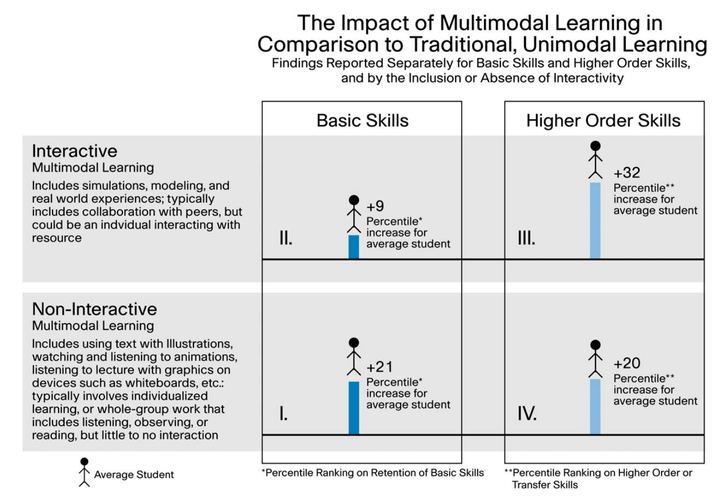
In the clip you have just listened to, I mention that it is proven that people need multiple modes of learning to really take information in, and I feel I should support that statement with some facts. Through surveys conducted on students from the Metiri group, they found a 21 percentile jump in scores when involved in non-interactive multimodal learning from single-mode learning.
A second piece I would like to add to my own story comes off the back of watching the TED Talk by Sir Ken Robinson, who sadly passed away in 2020. I highly recommend you watch the TED Talk, it is very amusing while still being serious when it needs to be. He spoke about how schools kill creativity. In his talk he mentions that there is a hierarchy in the education system; not only in the UK, but worldwide, where subject groups are ranked unevenly on different podiums. Maths and languages come out on top; followed by the humanities; with the bottom being the arts. Ken goes on to say “we don’t grow into creativity, we grow out of it. Or rather, we get educated out of it”. A strong statement, but one many people are captivated by, as it became the most viewed TED talk of all time – sitting at over 70 million views. Through my own experience, I too can agree with this as when I was choosing my subjects for going into S4 (around 15 years old for non-scottish folk), I was told that I wouldn’t get into university without doing science or maths. I also wasn’t the only one in my year that year to be told similar things. My school, amongst many, was biassed towards science and languages. Back then, 14 year old me was adamant to prove that teacher wrong, and so I did. My school pushed people to do a language and at least one, if not all three sciences, as well as maths and english. Music and art was placed in the same time period, which meant that students could not choose both of these – highlighting the lack of appreciation for this kind of intelligence. The arts were also majorly underfunded. I remember we had to take turns using some instruments as they did not have enough working ones for the amount of people who wanted to use them. This is just my own account, coming from one of the top performing state schools in scotland. You can only imagine what it is like for less privileged schools.
Students and Their Learning Styles
In addition to my own opinion, I will now discuss the interviews with the university students. Speaking to them individually, it became apparent that the thoughts and feelings they had around learning, differed between schools and individuals. One recurring point though, was the level of support they received in high school for their learning styles. It was either no support at all, or done as a class. The interviews suggest that there doesn’t seem to have been any focus by teachers on each individual student to see if the chosen methods of learning were working for them. More often than not in school, teaching is done in a very linear way: students often write out notes from a PowerPoint, whiteboard or projector. This method works for some people, but it really doesn’t work for visual or kinaesthetic learners, leaving them behind and causing them to find their own way of learning the same information. One student I talked to said: “High school work didn’t necessarily suit my learning style”. He goes on to say that it took until being in a university environment for him to see what his learning style was and how he can utilise this for longer writing tasks. During his high school years, “work that would nowadays cause me minimal stress at times became difficult and hard to manage”. If teachers looked at students in unique ways, it might have made Barry aware that there are other ways of doing the planning stage of essays, for example, and therefore relieved him of some stress. The only preparation for university through high school was SQA Advanced Highers, which started to incorporate a more academic writing style into courses, which would be used in Uni. The other piece of preparation the interviewees mentioned were the free periods they had in their final year of high school, which simulated the idea of working in your own time and having space between classes. Both Anne and Molly, who study International Business and Law, respectively, mention “…free periods definitely were an attempt to adapt you to the idea of independent learning that you get at uni.” . Although, my free periods were used for playing Poker and having a laugh, so I can’t say I fully prepared myself for university life. I joke about playing poker during my free periods, but there is a bit of benefit to this. Having regular breaks between studies is shown to improve overall retention of information and build the neural connections which we will cover in my third blog post.
One of the questions I asked the students was: “What could lecturers do to improve their teaching so that all learning styles get accounted for?” and similar themes came up – multimodal! A push for more visuals in the PowerPoints, supporting video links and other media to help build the strength of the information as well as support other learning styles. The gain from using visuals like diagrams and flowcharts in the PowerPoints would help keep engagement up in the lecture as we all know how mind numbing it can be just having someone read off the screen. There was also a positive point made that lectures are changing by using online quiz websites such as Mentimeter which allow students to answer questions from their phone. Molly preferred this new technique for learning saying: “I think the attempts to try different techniques such as Mentimeter are effective and you can see clear engagement, it also helps people to answer without speaking in front of 200 people”. It also avoids the awkwardness of three voices answering over one another in a Microsoft Teams call. There are positives to the techniques lecturers are using, but they all involve technology, which we will get to in the next blog post.
First Year Students and COVID-19
As well as speaking to some third and fourth year Uni students, I also spoke to a couple of first year law students who gave me an insight into what it was like going through their last year of high school with COVID-19. When asked what sort of preparation they received for further education in their last year of high school both of them mentioned: “It was lacking, disruption in the school year meant there was very little time spent preparing to come to university so this first year came as a bit of a shock”. It took away any connection they would have in normal times with their teacher and became quite impersonal. I can’t imagine what it must have been like making a big life step such as moving to Uni without being able to see anyone physically. Part of me is glad that it was my third year in University that I had to go through with a lockdown rather than my last year in high school.
The Strange System of Luxembourg
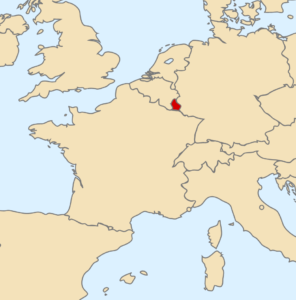
When it comes to schooling, I know my own experience of high school and the ways in which our teachers would try to focus our learning styles but as this is majorly based on University, I don’t know anything about foreign schooling systems and how they prepare students for higher education. This is where my friend Ellie comes in, having grown up in Luxembourg, a country of just over 600,000 people the way high school works there is very different from Scottish schools and quite flawed in a way as well. Ellie, who studies product design, spent her whole lower education in Luxembourg going through the system and was kind enough to give me her experience of it. She started off by explaining how they pick their subject group at the age of 15, which seems very young considering how much teenagers develop between 15 and 17 years old. Ellie also said that there isn’t really any way of changing later down the line without having to resit a year. In the school they have different academic groupings, Ellie was in the classic group which was the standard academic subjects, all being taught in German except French and Maths as they want to push you into knowing other languages so you can study in different countries. This was the mainstream for a lot of students at her school, but her own personal experience was a bit different as she did the international baccalaureate to prepare her for international school. She did SQA Standard Grades and Highers, it also allowed her to avoid learning all the subjects in French as French was one of the subjects.

When it comes to support for individual learning styles, Ellie mentions it was quite lacking. Since she was part of the classic academic group, her teachers heavily relied on reading, writing and auditory means of study, and there wasn’t much input for the visual and kinaesthetic styles. Luckily for her this suited her learning style and so she didn’t really have a problem with it. But the downside of this, for her, is that in product design at university, she often sticks to what she knows and writes her ideas down instead of sketching them out as we are expected to. If a student wanted to do art or music at Ellie’s school it was a very harsh place for them to thrive, as the support for those subjects just wasn’t there at all. “There’s only a handful of schools that even offer the music section” she mentions when talking about the choices people made at 15 years old. Ellie also says because Luxembourg is a profit-driven nation, in her experience, they really push people to go into law, medicine and engineering with the rest put to the back of their mind. Although I haven’t spoken to someone from every country in the world, it is clear to see Ken Robinson was speaking some truth about the hierarchy in schools not only in the UK but in other countries too.
My Old High School Teacher
So far in this blog, it is feeling very one sided towards students and the lack of support from teachers, but that isn’t the point I am wanting to make. Teachers are the backbone of our education system and without them the world would be a mess. “A world without teachers is a world deprived of learning and with a lot less love” says Andy Hargreaves, a research professor at Boston college. Teachers are largely responsible for teaching children, teenagers and adults about all walks of life, from racism to climate change to how to act around our peers. For many people, teachers are the reason we pick up certain hobbies or go into a lifetime of work in a specific field.
In preparation for writing this blog, I had the chance to ask one of my teachers from high school some questions about his experience in school and how he was taught to teach. Mr L. as we’ll call him was my graphic communication teacher for all six years of high school and a great inspiration as to why I went down the design route. With my first question, I asked how teaching has changed since he was in university which provided a great reply. Mr L mentions that they were trained to communicate in the clearest way based on the subject, although they weren’t really made aware of the fact students learn in different ways. He gave the example of teaching maths, “pupils followed an example on the board (reading and to some extent visual), this was explained by the teacher (auditory) and backed up by some Question and Answer (auditory and reading – if it was written on the board). Finally, the pupil demonstrated the skill (kinaesthetic, visual)”. This example shows the VARK learning method is rife in education, just not obvious when we think about learning in maths class. Mr L goes on to explain that most of his training was to some extent curriculum-driven, except with pupils identified as having ‘barriers to learning’. These barriers include dyslexia, dyspraxia, autism, amongst others. These students with learning barriers would get in-class support or work with a pupil support teacher. This support started in 1996 and as time went on the support for these students has increased with “teachers becoming more aware of how to support pupils with learning needs”. This ended up developing into individual profiles for each pupil who had a diagnosed condition, they would get extra help depending on the level of support they required. This ‘extra help’ came down to what stage of support they needed. “…stage 3 (most support needed) to stage 1 (some support needed)” he mentions. These stages only apply to pupils with conditions that are known to the school, so other students that may struggle with the learning styles used in certain subjects won’t receive the necessary help to improve and could possibly end up falling behind. Mr L makes a good point on this, however, as he says “clearly there is also a workload issue if teachers are expected to familiarise themselves with upwards of 300 pupils* profiles (*secondary only). I feel a system does need to be put in place to teach children in school about the ways they can learn and how different ways may benefit them individually.
The way a lesson is taught comes down to the teacher’s own personal thoughts on the best way to get that information across to that certain group of pupils.They ask themselves questions like “What have I learned from research and information amongst teachers?”, “From what I know about these pupils, in terms of age, stage,background, prior learning, how do I make this a valuable learning experience” and “How do I best give feedback to these pupils to serve the learning and growth process?”. It’s fine trying to teach each lesson using all modes but this becomes unrealistic and can cause lessons to be a gimmick rather than detailed and informative. “A good teacher will try to communicate, engage and feedback to pupils using the modes that best serve the pupils in front of them” mentions Mr L. Although it is harder to use kinaesthetic learning in maths, it is still possible; so if the group of pupils would benefit from that over auditory, then the teacher would teach the lesson that way. In Mr L’s opinion, trying to branch out the teaching into all modes and spreading it thin may do more damage than good. Teachers have a hard job, day and night, making each lesson as useful as it can be while sticking to the curriculum and keeping the engagement up in class all at the same time.
The last part of the conversation I had with Mr L was asking how it is he likes to teach a class, which also relates to how most teachers do it. I asked him this: “When you are teaching a class, is it important for you to focus on how individuals are taking in the information and then go on to help them focus on learning visually rather than reading blocks of text if you notice them struggling?”. From this question I got a fantastic response in which he mentioned how he looks for three things all the time. The first is if the work is being assessed, secondly how well the work is understood and thirdly, what, if any, the barriers are. These three points were good but he followed up with a great example of a student he has currently whose second language is English and so struggles with verbal communication over written. This requires Mr L to go over tasks and talk through the key parts slowly with the student. When it came down to following the marking instructions, the student was trying to mention every single point in the marking criteria, when that wasn’t actually required, but because the written instructions were saying that, he was being overly careful and therefore taking longer than the required time. The flaw in teaching and how students are taught doesn’t come from the teacher but the material and marking instructions teachers must follow for the students to hit the passing grades. Although this conversation was over email, I had a great time speaking to my old teacher again. It brought back some good memories of my time in high school and reminded me why I am going down the route I am. So thank you, Mr L.
Round Up
It is always good speaking to people and getting a bigger picture for the story, that is still true for this topic. My own experience mixed with fellow students’ stories explored how different minds work differently and feel they benefit from other ways of learning. A light gets shone on the lack of diversity in teaching methods in high school for individuals, especially with the points from a high school teacher; who expressed that he wasn’t necessarily taught about individual learning styles, but just to teach the class in a certain way that gets the information across to that group of pupils. A slight issue was discovered in the system with those students who have barriers to their learning and so get extra help, but a lot of students more than likely go under the radar. Although most talks were with British students, it was also very interesting hearing a completely different system explained from Luxembourg, which as I mentioned in my own story, has a hierarchy of subjects with arts being, again, shamed at the bottom.
If you enjoyed this bit of reading, the next blog, Technology and Brains will express the possible future of teaching in classrooms and how brains need to be pushed similar to how you would push yourself in the gym.
Up Next:
Technology and Brains